Loose-Leash Walking: How to Stop Your Dog Pulling on the Lead
A step-by-step, force-free method to teach your dog to walk calmly beside you — no more sore arms or dragged-along walks.
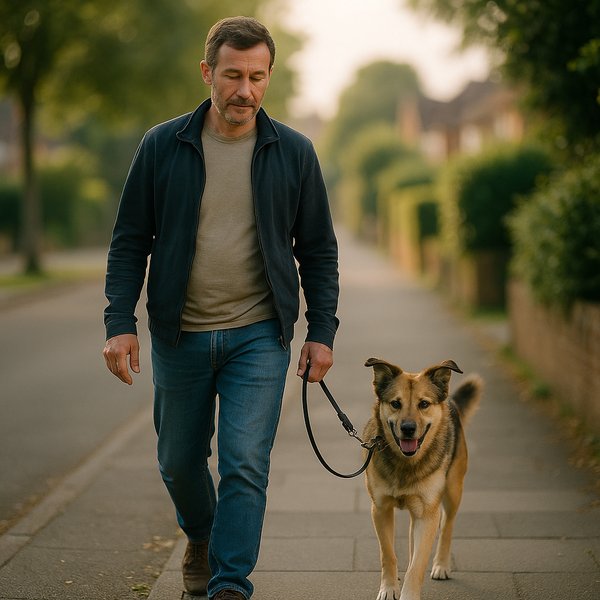
Why Dogs Pull on the Lead in the First Place
If your dog drags you towards every lamppost, dog, or discarded chip wrapper, you're not alone — pulling is one of the most common walking complaints vets and trainers hear. It isn't stubbornness or dominance; it's simply that pulling works. From your dog's perspective, straining forward gets them to the interesting smell or the exciting sight faster, so the behaviour is constantly being rewarded without either of you realising it.
"Pulling is a habit built one successful tug at a time. The good news is that a new habit — walking politely — can be built the same way, through consistent, small rewards for the behaviour you actually want." — Dr. James Harper, DVM
Breed and energy level play a role too. Working and sporting breeds bred for endurance or pulling tasks (think huskies, terriers, or spaniels) often have naturally high forward drive, and breeds with different exercise needs may simply need more structured outlets before they can settle into a calm walking pace.
Excitement, under-exercise, and lack of prior leash practice all compound the problem. A dog that hasn't had a chance to burn off energy, or one who was never taught what a lead is for, will naturally treat every walk as a race to the next exciting stimulus. Understanding this is the first step — it reframes the goal from "correcting bad behaviour" to "teaching a new skill," which is a far more effective (and kinder) mindset for training.
Choosing the Right Equipment for Leash Training
Before you start training, make sure your equipment is setting you up for success rather than working against you. The right gear won't fix pulling on its own, but the wrong gear can make progress much harder.
Recommended options
- Front-clip harness — the lead attaches at the chest, gently redirecting the dog's momentum sideways when they pull, rather than letting them drive forward with full force
- Y-shaped harness with two points of contact — offers more control for larger or stronger dogs without restricting shoulder movement
- Standard flat collar — fine for dogs who already walk reasonably well, but not ideal for committed pullers as it puts pressure directly on the neck and throat
What to avoid
- Retractable leads — they encourage pulling by design and offer poor control in busy or unpredictable environments
- Choke or prong collars — these rely on discomfort to suppress pulling and can cause injury to the neck, trachea, and oesophagus over time
- Back-clip harnesses alone for strong pullers — these can actually reward pulling by engaging a dog's natural opposition reflex
If you're setting up a new puppy for their first walks, it's worth reviewing our new puppy checklist to make sure you've got the right gear from day one — introducing a well-fitted harness early makes leash training significantly easier down the line. Whatever you choose, fit is everything: a harness that's loose enough to twist or tight enough to chafe will undermine even the best training technique.
The Step-by-Step 'Stop and Stand' Technique
This is one of the most reliable, force-free methods for teaching loose-leash walking, and it works because it removes the reward for pulling entirely.
- Step 1 — Start still. Stand with your dog on a loose lead. The moment they pull ahead and the lead goes taut, simply stop walking. Don't yank, don't speak — just become a statue.
- Step 2 — Wait for slack. Your dog will likely turn back, sit, or glance at you once they realise forward motion has stopped. The instant the lead goes slack, mark it with a cheerful "yes" and continue walking.
- Step 3 — Repeat, repeat, repeat. Every single time the lead tightens, stop. Every time it slackens, move forward and reward with praise or a small treat. Consistency is what teaches the lesson — a tight lead means "the walk pauses," a loose lead means "the walk continues."
- Step 4 — Reward position, not just slack. Occasionally drop a treat at your side or by your leg while walking so your dog learns that staying near you is specifically rewarding, not just an accident of a loose lead.
- Step 5 — Gradually add distractions. Once your dog reliably walks loosely in a quiet garden or hallway, move to a quiet street, then a busier one, increasing difficulty only once the previous level is solid.
Expect the first few sessions to be slow — you might only make it a few metres in five minutes. That's normal, and it's a sign the technique is working, not failing.
Chat with Rio, our AI health companion, for personalised guidance tailored to your pet's needs.
Ask Rio →Common Mistakes That Undermine Progress
Even well-intentioned owners can accidentally sabotage their own training. Here are the pitfalls to watch for.
- Inconsistency between family members. If one person stops every time the lead tightens but another lets the dog drag them along, your dog receives mixed signals and progress stalls. Everyone who walks the dog needs to use the same rules.
- Training only on "easy" walks. Practising exclusively in a calm garden won't transfer automatically to a park full of squirrels. Difficulty needs to be increased gradually and deliberately.
- Over-long sessions. Dogs — especially puppies — have short attention spans. Ten focused minutes of proper practice beats an hour of frustrated tugging.
- Skipping physical and mental exercise beforehand. A dog who hasn't had any outlet for pent-up energy will find it far harder to concentrate. A quick game of fetch or a sniffing session in the garden before formal leash practice can make training walks noticeably calmer.
- Punishing pulling with jerks or shouting. This can create anxiety around walks altogether and, in some cases, contributes to leash reactivity rather than solving the pulling.
It's also worth remembering that under-exercised dogs are more prone to pulling simply because walks are their main outlet for energy — a dog carrying excess weight or lacking regular movement is more likely to lunge and strain. If your dog's exercise routine and weight need a broader look, our guide on the causes and risks of dog obesity covers how activity levels tie into overall health.
Troubleshooting Specific Triggers: Dogs, Squirrels, and Other Temptations
Loose-leash walking often falls apart the moment a genuinely exciting trigger appears — another dog, a cat, a jogger, or wildlife. These moments need a slightly different approach than general pulling.
The 'engage-disengage' game
As soon as your dog notices a trigger in the distance (before they lock on and start straining), mark the moment with a cheerful word and reward with a treat. This teaches your dog that noticing a trigger and then looking back at you is worth their while — over time, they'll start checking in with you automatically rather than fixating.
Increasing distance
If your dog is already too aroused to focus, you're too close. Create more space between your dog and the trigger, then practise the engage-disengage game at that easier distance before gradually closing the gap over several sessions.
Managing reactive moments
Some dogs don't just pull towards triggers — they bark, lunge, or spin. If this sounds like your dog, it's worth reading up on wider walking etiquette in public spaces to help you manage encounters safely while you continue training, and consider working with a qualified force-free trainer for more tailored support.
Multi-dog households or dogs recently spayed or neutered may also show temporary shifts in energy and focus during walks — if you've recently had this procedure done, our guide to spaying and neutering explains what behavioural changes to expect during recovery and beyond.
Building Loose-Leash Walking Into Your Daily Routine
Consistency beats intensity when it comes to leash training. Short, frequent practice sessions woven into everyday walks will get you further than occasional long, frustrated attempts.
- Start every walk with a few minutes of formal practice near your front door before allowing more relaxed sniffing time further along the route
- Use everyday walks as training opportunities rather than treating training and exercise as separate activities — every walk is a chance to reinforce good habits
- Keep treats small and high-value so your dog stays motivated without filling up or gaining excess weight from training rewards
- Track progress loosely — celebrate small wins like an extra ten metres of loose lead before the next pull, rather than expecting perfection immediately
- Be patient with setbacks — new environments, tiredness, or excitement can cause temporary regressions, and that's a normal part of learning, not a failure
Most dogs show meaningful improvement within two to four weeks of consistent daily practice, though highly excitable or previously untrained adult dogs may take a little longer. Stick with the method, keep sessions positive, and resist the urge to revert to old habits like yanking the lead when frustration creeps in.
A dog that walks politely on the lead isn't just more pleasant to exercise — it opens the door to calmer vet visits, easier travel, and more confident outings together. If you're planning trips further afield, it's also worth checking travel vaccination requirements well in advance so your well-walked companion is ready to explore safely wherever you go.
Chat with Rio, our AI health companion, for personalised guidance on your pet's nutrition and weight management.