Urinary Blockage in Male Cats: Emergency Signs Every Owner Must Know
A blocked bladder is a true feline emergency. Learn the warning signs, causes, and prevention steps that could save your cat's life.
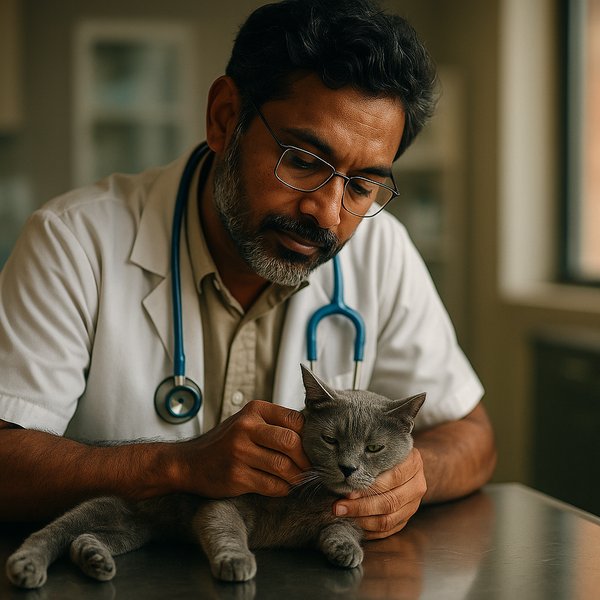
Why Male Cats Are Especially Vulnerable
A urinary blockage (also called urethral obstruction) happens when the tube carrying urine from the bladder out of the body becomes partially or completely blocked. This is one of the most serious emergencies in feline medicine — and it overwhelmingly affects male cats. The reason is simple anatomy: a male cat's urethra (the tube that carries urine) is much longer and narrower than a female's, making it far easier for crystals, mucus plugs, or inflammatory debris to get lodged inside it.
When the urethra blocks completely, urine can no longer leave the body. Toxins that are normally filtered out and excreted build up rapidly in the bloodstream, and the bladder itself can become dangerously overstretched. Without treatment, a fully blocked cat can die within 24 to 48 hours from kidney failure, a ruptured bladder, or a fatal build-up of potassium affecting the heart.
"A blocked cat is one of the true feline emergencies. If your male cat is straining in the litter tray and nothing is coming out, that's not constipation — treat it as a crisis and get to a vet immediately." — Dr. James Harper, DVM
This condition falls under the broader umbrella of FLUTD (Feline Lower Urinary Tract Disease), a term covering several conditions affecting the bladder and urethra. While female cats can develop bladder inflammation and infections too, it's the anatomy of the male cat that turns a manageable irritation into a life-threatening obstruction. Understanding this risk is the first step toward catching the problem before it becomes an emergency.
Warning Signs You Must Not Ignore
The early signs of a developing blockage are often subtle and easily mistaken for a simple litter tray issue or mild digestive upset. Knowing what to look for — and acting quickly — makes all the difference.
Early to moderate signs
- Frequent trips to the litter tray with little or no urine produced
- Straining, crying out, or appearing to strain while passing very little urine
- Licking excessively at the genital area
- Urinating outside the litter tray, including on cool surfaces like tiles or bathtubs
- Blood-tinged urine
- Reduced appetite and a hunched, uncomfortable posture
Emergency signs — go straight to a vet
- Repeated straining with absolutely no urine produced
- A hard, distended, painful abdomen
- Vocalising in pain, restlessness, or hiding
- Vomiting and lethargy
- Collapse, weakness, or a slow, laboured breathing pattern
It's worth noting that these symptoms can look deceptively similar to urinary tract infections seen in dogs, but in male cats the risk of complete obstruction makes prompt action far more urgent. If your cat is straining repeatedly and producing nothing, do not wait to see if things improve overnight — this can turn fatal within hours.
Use PetCare.AI's free symptom checker to assess your pet's condition and get instant guidance.
Try PetCare.AI Free →What Actually Causes a Blockage
Several different problems can converge to physically block a male cat's urethra, and often more than one factor is at play at once.
Common causes
- Struvite or calcium oxalate crystals — mineral crystals that form in urine, particularly when the urine is too concentrated or has an abnormal pH
- Urethral plugs — a mix of mucus, cellular debris, and crystals that can lodge in the narrow urethra
- Idiopathic cystitis — bladder inflammation with no identifiable infection, often triggered or worsened by stress
- Urethral spasm — the muscles around the urethra tighten involuntarily, narrowing the passage further
- Less commonly, bladder stones or, in older cats, tumours
Stress plays a surprisingly large role in feline urinary disease. Cats are highly sensitive to changes in their environment — a new pet, a house move, or even rearranged furniture can trigger a flare-up of bladder inflammation. This is one reason why creating a calm, enriched indoor environment is such an important part of long-term urinary health, not just behavioural wellbeing.
Diet and hydration also matter enormously. Cats that eat mostly dry food and drink very little tend to produce more concentrated urine, which encourages crystal formation. Overweight, middle-aged, indoor-only male cats are statistically at the highest risk, which is another reason why managing weight from an early age pays off well into adulthood.
Emergency Treatment: What to Expect at the Vet
If your vet confirms a blockage, treatment needs to begin immediately — this is not a condition that can be managed at home. Your cat will typically be admitted for close monitoring and active intervention.
Typical treatment steps
- Stabilisation first — intravenous fluids and medication to correct dangerous potassium levels and treat shock before anything else
- Sedation and catheterisation — a urinary catheter is passed to relieve the obstruction and drain the bladder
- Bladder flushing — the bladder may be gently flushed to remove residual crystals or debris
- Pain relief and anti-spasmodic medication — to relax the urethra and keep your cat comfortable
- Ongoing hospitalisation — the catheter usually stays in place for 24–72 hours while kidney values and urine output are monitored
In cats who block repeatedly despite treatment, a surgical procedure called a perineal urethrostomy may be recommended. This creates a wider, permanent opening that makes future blockages far less likely. It's a significant decision, and your vet will talk you through the risks and recovery involved.
Costs for emergency urinary blockage treatment can add up quickly given the hospitalisation and monitoring involved, so it's worth understanding your options in advance — our guide to vet bill payment options and financial help covers ways to manage unexpected costs without delaying care.
Find trusted veterinarians near you on PetCare.AI and book a consultation.
Find a Vet →Preventing a Recurrence: Diet, Hydration and Stress
Unfortunately, cats who have blocked once are at meaningfully higher risk of blocking again, often within the first year. The good news is that several evidence-based changes can dramatically lower that risk.
Practical prevention steps
- Increase water intake — switch some or all meals to wet food, and consider a pet water fountain to encourage drinking
- Prescription urinary diets — your vet may recommend a therapeutic food formulated to control urine pH and mineral concentration
- Reduce environmental stress — provide multiple litter trays, vertical space, hiding spots, and predictable routines
- Maintain a healthy weight — excess weight is strongly linked to urinary disease, and certain breeds carry additional predisposition worth understanding through our guide on breed-specific obesity risks
- Keep litter trays scrupulously clean — cats may suppress the urge to urinate in a dirty tray, which worsens concentration and irritation
Regular veterinary check-ups also matter more than many owners realise. Routine urine testing during an annual health screening can catch crystal formation or early bladder inflammation before it escalates into a full obstruction. Multi-cat households should also ensure enough resources — trays, food stations, and resting spots — to reduce competition-related stress, a known trigger for feline cystitis flare-ups.
Living Confidently With a Cat Prone to Blockages
A history of urinary blockage doesn't mean your cat can't live a long, comfortable life — it simply means ongoing vigilance becomes part of your routine. Keep a mental note of your cat's normal litter tray habits so you'll immediately notice if something changes.
Many owners find it helpful to keep a simple log of urination frequency and litter tray output for the first few weeks after a blockage episode, since subtle changes are often the earliest clue that trouble is returning. Stock your home with backup wet food and know in advance which emergency clinic you'd go to out of hours — having a plan removes precious minutes of hesitation if symptoms recur.
Above all, trust your instincts. If your male cat is straining, restless, or spending unusual time in the litter tray, treat it as urgent rather than waiting to "see how it goes." Early intervention is genuinely the difference between a straightforward vet visit and a life-threatening emergency.
Chat with Rio, our AI health companion, for personalised guidance tailored to your pet's needs.
Ask Rio →Chat with Rio, our AI health companion, for personalised guidance on your pet's nutrition and weight management.