How to Measure Pet Food Portions Correctly — A Complete Guide to Proper Feeding
Learn proper portion measurement techniques to prevent overfeeding and maintain your pet's ideal weight with expert guidance.
Why Accurate Portion Control Is Critical for Pet Health
Proper portion control is one of the most important aspects of pet care, yet it's frequently overlooked by well-meaning pet owners. Overfeeding is the leading cause of obesity in pets, with over 60% of dogs and cats in the UK carrying excess weight that significantly impacts their health and lifespan.
"I see the devastating effects of portion creep every day in my practice. Pet owners often underestimate how much they're actually feeding, and those extra calories add up quickly. Accurate measurement isn't just about weight — it's about preventing diabetes, joint disease, and heart problems." — Dr. James Harper, DVM
The consequences of improper feeding extend far beyond weight gain. Overfeeding can lead to digestive upset, nutrient imbalances, and increased risk of bloat in large breed dogs. Conversely, underfeeding can result in malnutrition, poor coat quality, and weakened immune function.
Many pet owners rely on visual estimates or use random containers for measuring food, leading to significant variations in daily caloric intake. This inconsistency makes it impossible to maintain your pet's ideal body condition and can mask underlying health issues that affect appetite and metabolism.
Essential Tools and Techniques for Accurate Food Measurement
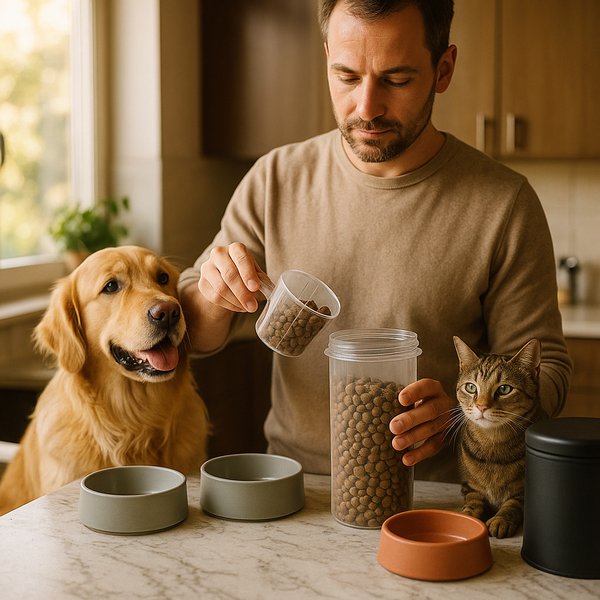
The foundation of proper portion control starts with using the right measuring tools. A standard measuring cup designed for pet food (typically 8 fl oz) is essential — avoid using random mugs, bowls, or coffee cups which can vary dramatically in size.
Recommended Measuring Equipment
- Dedicated measuring cups with clear markings for dry kibble
- Kitchen scales for precise weight measurements (most accurate method)
- Portion control scoops with volume markings for convenience
- Measuring spoons for treats and supplements
When using measuring cups, always level off the contents rather than allowing food to heap above the rim. For wet food, use the same measuring principles but account for the different density compared to dry kibble. Weighing food by grams provides the most accurate measurement, particularly important for small pets where a few extra grams can represent a significant caloric excess.
Store measuring tools near your pet's feeding area to make accurate portioning part of your daily routine. Clean tools regularly to prevent rancid oils from kibble affecting measurement accuracy and food palatability. Remember that different kibble sizes and shapes can affect how much fits in a measuring cup, so consistency in food brand helps maintain accurate portions.
How to Calculate Your Pet's Daily Food Requirements
Determining the correct amount to feed your pet requires more than simply following the guidelines on pet food packaging. These recommendations are starting points that must be adjusted based on your individual pet's age, activity level, body condition, and metabolic rate.
Key Factors Affecting Food Requirements
- Life stage: Puppies and kittens need 2-3 times more calories per pound than adults
- Activity level: Working dogs may need 50% more calories than sedentary pets
- Body condition: Overweight pets require calorie restriction for gradual weight loss
- Health status: Medical conditions can significantly alter nutritional needs
Start with the manufacturer's feeding guidelines and monitor your pet's body condition over 2-3 weeks. You should be able to feel your pet's ribs easily without excess fat covering, and see a visible waist when viewed from above. For detailed guidance on interpreting pet food labels and nutritional information, read our comprehensive pet food label reading guide.
Senior pets often require fewer calories due to decreased activity levels, whilst pregnant or nursing females need substantial increases in food quantity and frequency. Keep a feeding diary to track portions, body weight changes, and any digestive issues that might indicate the need for adjustment.
Chat with Rio, our AI health companion, for personalised guidance tailored to your pet's needs.
Ask Rio →Common Portion Control Mistakes and How to Avoid Them
Even well-intentioned pet owners make frequent errors when measuring food portions. Portion creep — the gradual increase in serving sizes over time — is one of the most common problems, often happening unconsciously as pets become more demanding at meal times.
Frequent Measuring Errors
- Using inappropriate containers: Coffee mugs, bowls, or random scoops vary widely in capacity
- Heaping measurements: Allowing food to pile above the measuring cup rim
- Inconsistent timing: Varying meal schedules affects appetite and metabolism
- Ignoring treats: Not accounting for training treats and snacks in daily calorie totals
- Multiple feeders: Family members feeding without coordination
Address these issues by establishing clear feeding protocols for all family members. Post feeding charts near the pet's bowls showing exact portions and timing. Remember that treats should comprise no more than 10% of your pet's daily caloric intake, and these calories must be subtracted from main meals to prevent overfeeding.
Be particularly cautious with calorie-dense foods like wet food or high-fat treats, where small measurement errors can result in significant caloric excess. Some pets are expert manipulators at meal times, using adorable behaviour to convince family members they haven't been fed — maintain feeding logs to prevent duplicate meals.
For pets with specific health needs, such as those requiring heart-healthy nutrition plans, precise portion control becomes even more critical for managing their condition effectively.
Monitoring Body Condition and Adjusting Food Portions
Regular body condition assessment is essential for determining whether your portion measurements are achieving the desired results. Visual and hands-on evaluation should be performed weekly, as weight changes often occur gradually and may not be immediately apparent.
Use the body condition scoring system to evaluate your pet objectively. For dogs and cats, you should easily feel the ribs without pressing hard, see a visible waist when viewed from above, and notice an abdominal tuck when viewed from the side. The spine and hip bones should be palpable but not prominent.
Signs Your Pet Needs Portion Adjustments
- Weight gain: Difficulty feeling ribs, loss of visible waist, reluctance to exercise
- Weight loss: Prominent ribs and spine, increased appetite, decreased energy
- Digestive issues: Loose stools may indicate overfeeding or food intolerance
- Behavioural changes: Increased begging or food-seeking behaviour
Make portion adjustments gradually — increase or decrease daily food by no more than 10-25% at a time, then monitor for 1-2 weeks before making further changes. Rapid dietary changes can cause digestive upset and make it difficult to determine the optimal feeding amount.
Certain breeds have higher risks for weight-related health problems, making portion control even more critical. Learn about breed-specific obesity risks to understand your pet's particular vulnerabilities and adjust feeding strategies accordingly.
Creating a Sustainable Daily Feeding Schedule
Establishing a consistent feeding routine reinforces proper portion control and helps regulate your pet's metabolism and digestive health. Scheduled feeding is superior to free-feeding for portion control, weight management, and monitoring appetite changes that may signal health issues.
Optimal Feeding Frequency by Life Stage
- Puppies (under 6 months): 3-4 small meals daily to support rapid growth
- Adult dogs: 2 meals daily, spaced 8-12 hours apart
- Kittens (under 6 months): 3-4 meals daily with high-calorie food
- Adult cats: 2-3 smaller meals to prevent overeating and vomiting
- Senior pets: May benefit from smaller, more frequent meals
Divide the total daily food allowance equally between meals, using your measuring tools consistently at each feeding. Remove uneaten food after 20-30 minutes to prevent spoilage and maintain food motivation. This also helps you monitor appetite changes that might indicate health problems.
Coordinate feeding times with family schedules to ensure consistency, and consider using automatic feeders with portion control features for busy households. However, automatic feeders should supplement, not replace, regular monitoring of your pet's eating habits and body condition.
Remember that proper nutrition extends beyond just portion control — ensure your pet has access to fresh water at all times, and consider how environmental factors like temperature and stress can affect appetite and digestion. By combining accurate measurement techniques with consistent scheduling, you'll provide the foundation for your pet's long-term health and vitality.
Chat with Rio, our AI health companion, for personalised guidance on your pet's nutrition and weight management.