Hypothyroidism in Dogs: Signs, Diagnosis and Lifelong Treatment
Learn about hypothyroidism in dogs — the most common endocrine disorder in canines — including breed predispositions, recognising the signs, diagnostic testing, and lifelong levothyroxine treatment.
What Is Hypothyroidism in Dogs?
Hypothyroidism — an underactive thyroid gland — is the most common endocrine disorder in dogs, affecting an estimated 0.2 to 0.8 per cent of the canine population. The thyroid gland, a small butterfly-shaped organ located in the neck on either side of the trachea, produces hormones (primarily thyroxine, or T4, and triiodothyronine, or T3) that regulate metabolism in virtually every cell of the body. When thyroid hormone production falls below normal levels, the entire body slows down — metabolism decreases, energy drops, and a cascade of subtle but progressive symptoms develops.
"Hypothyroidism is one of the most underdiagnosed conditions in dogs because its symptoms are so non-specific. Weight gain, lethargy, and skin problems can have dozens of causes, and owners often attribute them to ageing or lifestyle. When I diagnose hypothyroidism and start treatment, the transformation can be remarkable — owners frequently tell me they have their old dog back within a few weeks." — Dr. Sarah Chen, DVM
The condition most commonly develops in middle-aged dogs, typically between four and ten years of age, though it can occur at any age. Unlike hyperthyroidism in cats (where the thyroid produces too much hormone), canine hypothyroidism almost always results from destruction or atrophy of the thyroid gland itself. Two primary mechanisms account for the vast majority of cases.
Autoimmune thyroiditis (lymphocytic thyroiditis): In approximately 50 per cent of cases, the dog's own immune system attacks and gradually destroys the thyroid tissue. This is an autoimmune process similar to Hashimoto's thyroiditis in humans. The destruction occurs slowly — often over one to three years — and clinical signs only appear once approximately 75 per cent of the thyroid tissue has been destroyed. Thyroglobulin autoantibodies (TgAA) can sometimes be detected in the early stages, before clinical hypothyroidism develops.
Idiopathic thyroid atrophy: The remaining cases involve replacement of normal thyroid tissue with fat (adipose tissue) through a process that is not well understood. There is no inflammatory component as in autoimmune thyroiditis. As with many endocrine conditions, our guide to diabetes management in pets explores how hormonal imbalances affect overall health and require lifelong management strategies.
Breed Predisposition to Hypothyroidism
While any dog can develop hypothyroidism, certain breeds have a significantly higher genetic predisposition. Understanding breed risk helps both owners and veterinarians maintain a higher index of suspicion, potentially leading to earlier diagnosis and treatment.
High-risk breeds: The breeds most commonly affected by hypothyroidism include Golden Retrievers, Doberman Pinschers, Irish Setters, Dachshunds, Boxers, Cocker Spaniels, Airedale Terriers, Great Danes, Old English Sheepdogs, and Miniature Schnauzers. The heritability of autoimmune thyroiditis has been well documented in many of these breeds, and responsible breeding programmes now include thyroid screening as part of pre-breeding health testing. The Orthopedic Foundation for Animals (OFA) maintains a thyroid registry that breeders can use to select against this genetic predisposition.
Golden Retrievers: This beloved breed deserves special mention as one of the most commonly affected. Studies suggest that approximately 25 per cent of Golden Retrievers will develop thyroid autoantibodies during their lifetime, though not all progress to clinical hypothyroidism. The breed's predisposition to multiple autoimmune conditions — including thyroiditis, allergic skin disease, and certain cancers — reflects an underlying immune dysregulation that breeders and owners should be aware of. If you have a Golden Retriever, baseline thyroid screening at age two with annual monitoring thereafter is a reasonable preventative strategy.
Doberman Pinschers: Dobermans have one of the highest prevalence rates of autoimmune thyroiditis of any breed, with some studies reporting thyroid autoantibodies in up to 30 per cent of the breed population. The condition tends to present earlier in Dobermans than in many other breeds, sometimes appearing as young as two to three years of age. Given the breed's concurrent risk for dilated cardiomyopathy — a condition that can be exacerbated by hypothyroidism — early thyroid screening is particularly important.
Size and sex factors: Medium to large breed dogs are more commonly affected than toy and miniature breeds. Neutered dogs of both sexes appear to have a higher risk than intact dogs, though whether this reflects a true hormonal influence or other factors is debated. There is a slight female predisposition in some studies, though the overall sex difference is not dramatic. Age of onset varies by breed but most commonly falls between four and eight years.
Recognising the Symptoms of Hypothyroidism
Hypothyroidism affects nearly every organ system because thyroid hormones regulate cellular metabolism throughout the body. The symptoms are often subtle, develop gradually, and are easily attributed to other causes — making awareness of the full clinical picture essential for timely recognition.
Weight gain without increased eating: This is one of the hallmark symptoms. Dogs with hypothyroidism gain weight despite eating the same amount — or sometimes even less — than before. The metabolic slowdown means fewer calories are burned at rest, and the excess energy is stored as fat. Unlike obesity from overfeeding, hypothyroid weight gain is resistant to dietary restriction alone and typically does not resolve until thyroid hormone replacement is started. If your dog is gaining weight despite appropriate caloric intake and exercise, hypothyroidism should be on the differential diagnosis list.
Lethargy and exercise intolerance: Reduced thyroid hormone means reduced energy production at the cellular level. Dogs become less active, sleep more, tire quickly on walks, and show diminished interest in play and interaction. This can be particularly insidious because the change is gradual — owners slowly adjust their expectations downward without realising their dog's energy level has significantly decreased over months or years.
Cold intolerance: Thyroid hormones play a central role in thermoregulation. Hypothyroid dogs may seek warmth more actively — preferring warm spots near heaters, burrowing under blankets, or being reluctant to go outside in cool weather. While this symptom is harder to objectively measure, many owners report a clear increase in heat-seeking behaviour.
Skin and coat changes: Dermatological signs are among the most common reasons owners initially seek veterinary attention. Hair loss (alopecia) is typical, often occurring symmetrically on the trunk and sparing the head and extremities. A classic pattern is the 'rat tail' — hair loss on the tail giving it a hairless, rat-like appearance. The coat becomes dull, dry, and brittle. The skin may thicken (myxoedema), become hyperpigmented, and develop recurrent bacterial infections (pyoderma) or yeast infections. For guidance on distinguishing thyroid-related skin issues from allergic conditions, see our pet allergies guide.
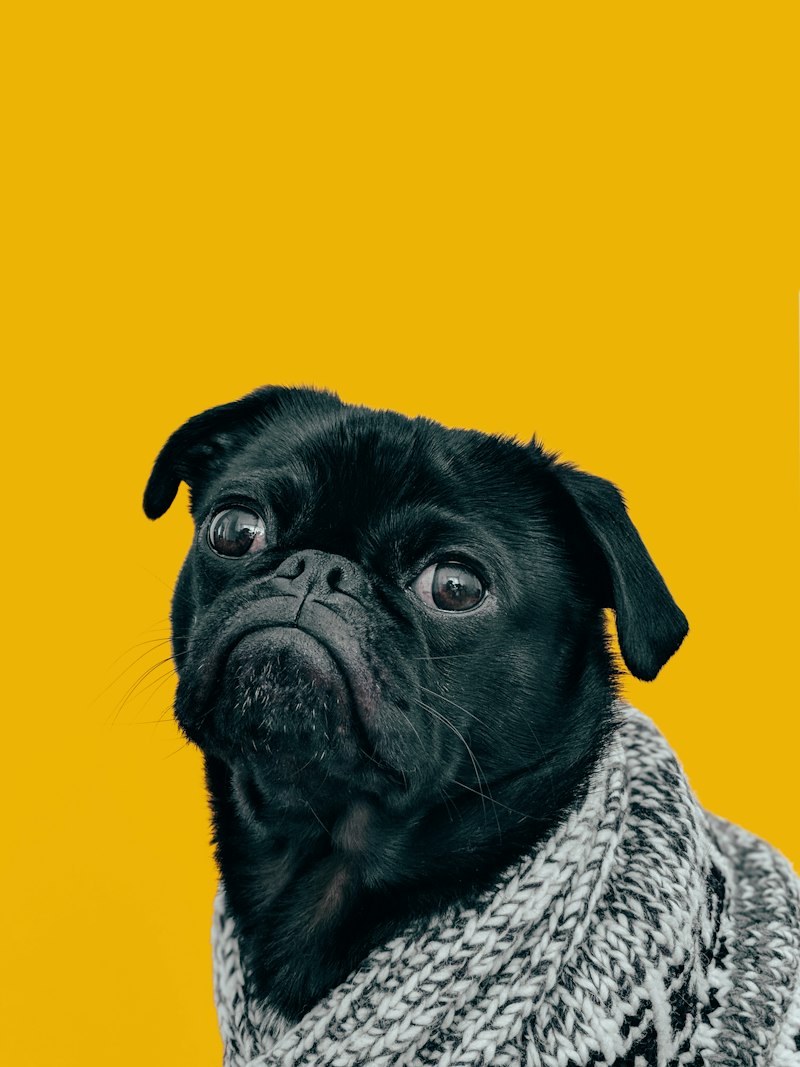
The 'tragic facial expression': One of the most distinctive — and poignant — signs of advanced hypothyroidism is a change in facial expression. Myxoedema (accumulation of mucopolysaccharides in the skin) causes facial puffiness, drooping eyelids, and a mournful, 'tragic' expression that experienced veterinarians can sometimes recognise at first glance. This facial change, combined with mental dullness and reduced alertness, gives hypothyroid dogs a characteristically subdued demeanour.
Diagnosis: Navigating Thyroid Testing
Diagnosing hypothyroidism should be straightforward in theory — measure thyroid hormone levels and if they are low, the dog is hypothyroid. In practice, thyroid testing is complicated by several factors that can lead to both false positives and false negatives. Understanding these nuances helps you appreciate why your vet may need multiple tests to reach a confident diagnosis.
Total T4 (thyroxine): This is usually the first screening test. Total T4 measures all the thyroxine circulating in the blood, including the large proportion bound to proteins. A normal total T4 effectively rules out hypothyroidism in most cases. However, a low total T4 does not confirm hypothyroidism because many non-thyroid factors can suppress T4 levels — a phenomenon known as 'sick euthyroid syndrome' or 'non-thyroidal illness.' Various medications (corticosteroids, phenobarbital, NSAIDs, sulfonamides), systemic illness, and even breed-specific normal ranges (Greyhounds and other sighthounds naturally have lower T4 levels) can all cause a misleadingly low T4 in a dog with a perfectly normal thyroid.
Free T4 by equilibrium dialysis (fT4ed): Free T4 represents the small fraction of thyroxine that is unbound to proteins and biologically active. When measured by the gold-standard equilibrium dialysis method, free T4 is less affected by non-thyroid illness and medications than total T4, making it a more reliable indicator of true thyroid function. A low free T4 in conjunction with a low total T4 and consistent clinical signs provides strong diagnostic confidence. However, free T4 measured by less accurate methods (analogue assays) does not offer the same reliability.
TSH (thyroid-stimulating hormone): In a hypothyroid dog, the pituitary gland detects low thyroid hormone levels and increases TSH production in an attempt to stimulate the failing thyroid. Elevated TSH combined with low T4 and free T4 is a highly supportive combination for a hypothyroidism diagnosis. However, canine TSH assays have limitations — approximately 20 to 40 per cent of truly hypothyroid dogs may have TSH levels within the normal range, meaning a normal TSH does not definitively exclude hypothyroidism.
The diagnostic panel approach: Because no single test is definitive, most veterinary endocrinologists recommend a thyroid panel that includes total T4, free T4 (by equilibrium dialysis), and TSH at minimum. Some panels also include thyroglobulin autoantibodies (TgAA) to identify autoimmune thyroiditis, and T3 levels for additional context. The results are interpreted together with the clinical signs and history — a dog with classic symptoms and a consistent thyroid panel can be diagnosed with confidence, while borderline results may warrant retesting in four to eight weeks.
Treatment with Levothyroxine: Lifelong but Effective
The treatment of hypothyroidism is conceptually simple: replace the missing thyroid hormone with a synthetic version. In practice, levothyroxine (also known as L-thyroxine or by brand names such as Soloxine and Thyro-Tabs) is the standard of care, and the results are typically gratifying for both dogs and their owners.
Starting treatment: Levothyroxine is given orally, usually twice daily, though some dogs can be managed on once-daily dosing after initial stabilisation. The typical starting dose is 0.02 milligrams per kilogram of body weight given every twelve hours. The medication is best given on an empty stomach or with a small amount of food — absorption can vary significantly depending on whether the stomach is full, and consistency in administration is important for stable hormone levels. Generic levothyroxine formulations are available but may have variable bioavailability, so many veterinary endocrinologists recommend sticking with a single manufacturer once the correct dose is established.
Dose adjustments and monitoring: Initial monitoring typically involves a thyroid panel four to six weeks after starting treatment, with the blood sample drawn four to six hours after the morning levothyroxine dose (the time of peak blood levels). The goal is a total T4 in the upper half of the normal range at peak levels. If the T4 is still low, the dose is increased; if it is excessively high, the dose is reduced. Once stable, monitoring every six months is typically sufficient, though any change in symptoms should prompt earlier retesting.
What to expect: The response to levothyroxine is one of the most rewarding aspects of treating this condition. Mental alertness and energy levels often improve within the first one to two weeks. Activity levels increase noticeably within two to four weeks — many owners describe getting 'their old dog back.' Weight loss begins within four to eight weeks as metabolism normalises, though complete return to ideal weight may take several months depending on the degree of obesity. Skin and coat improvements are the slowest to manifest — significant hair regrowth typically takes three to six months, and full coat restoration may take up to a year. Skin infections resolve more readily once thyroid levels are normalised.
Lifelong commitment: Hypothyroidism in dogs is almost never reversible — the thyroid tissue that has been destroyed by autoimmune attack or replaced by fat does not regenerate. Levothyroxine treatment is therefore lifelong. Fortunately, the medication is inexpensive, well tolerated, and has very few side effects when dosed correctly. Overdosing is uncommon with proper monitoring, but signs of excessive thyroid hormone (hyperthyroidism) include restlessness, weight loss despite increased appetite, increased thirst and urination, and rapid heart rate — these should prompt immediate veterinary consultation and dose reduction.
Prognosis and Long-Term Outlook
The prognosis for dogs with hypothyroidism is excellent — arguably the best of any endocrine disorder in veterinary medicine. With consistent levothyroxine supplementation and regular monitoring, hypothyroid dogs can live normal, full-length lives with an excellent quality of life. The condition does not shorten lifespan when properly managed.
Symptom reversal timeline: Understanding when to expect improvement helps you track your dog's progress and recognise potential issues. Mental alertness and energy improve within one to two weeks. Weight loss becomes apparent within one to two months. Skin thickening and hyperpigmentation begin to improve within two to three months. Hair regrowth begins within two to four months, with substantial improvement by six months. Facial puffiness (myxoedema) resolves over two to three months. Reproductive function, if affected, typically normalises within three to six months of treatment.
What does not fully reverse: In most cases, all clinical signs resolve completely or nearly completely with treatment. However, dogs that were hypothyroid for an extended period before diagnosis — particularly those with severe myxoedema or significant peripheral neuropathy — may retain some residual effects. Early diagnosis and treatment therefore produce the best outcomes, reinforcing the importance of recognising symptoms promptly and not dismissing them as normal ageing.
Associated conditions to monitor: Hypothyroid dogs may have concurrent conditions that also require management. Hyperlipidaemia (elevated blood fats) is very common and usually resolves with thyroid treatment but should be monitored. Megaoesophagus — a serious condition involving dilation and reduced motility of the oesophagus — has been associated with hypothyroidism and may improve with treatment. Peripheral neuropathy and myopathy, while less common, can also develop and typically respond well to thyroid supplementation.
Living your best life together: Once your hypothyroid dog is stabilised on levothyroxine, their daily life should be essentially normal. Regular exercise, a balanced diet appropriate for their ideal weight, and twice-yearly veterinary check-ups with thyroid monitoring are all that is typically required. Many owners find that their dog seems rejuvenated after treatment — more playful, more engaged, and more like their younger selves. Hypothyroidism is a lifelong condition, but with a daily pill and periodic blood tests, it is one of the most manageable chronic diseases in veterinary medicine.
Use PetCare.AI's free symptom checker to assess your pet's condition and get instant guidance.
Try PetCare.AI Free →Chat with Rio, our AI health companion, for personalised guidance on your pet's nutrition and weight management.