Cherry Eye in Dogs and Cats — Causes, Treatment & Surgery Options
Cherry eye creates a red, swollen appearance in your pet's eye. Learn when home care helps and when surgery is needed.
What Is Cherry Eye in Pets?
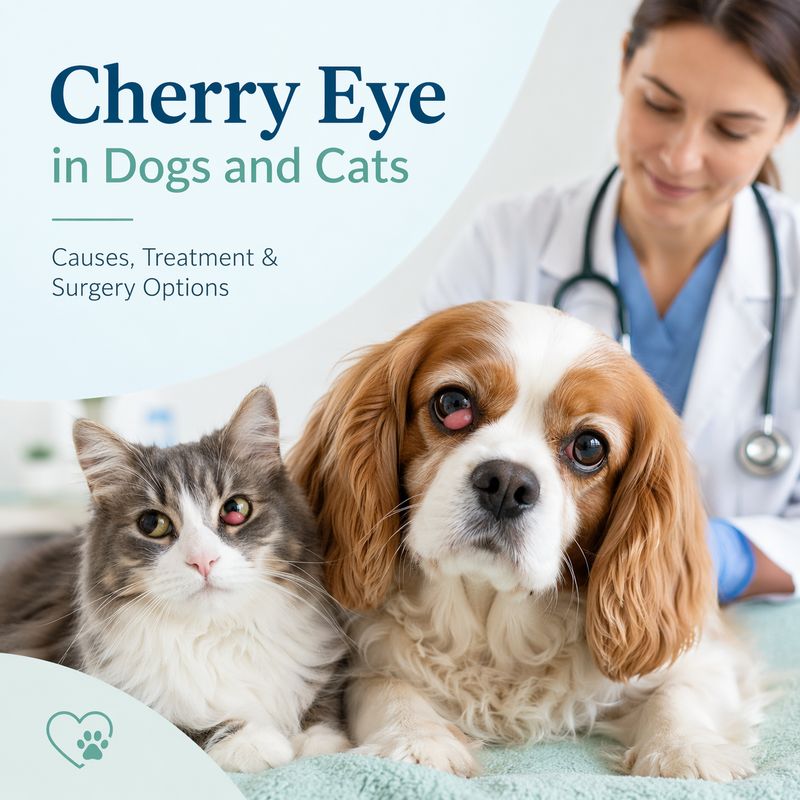
Cherry eye is a condition where the gland of your pet's third eyelid (also called the nictitating membrane) becomes swollen and protrudes from the corner of the eye. This creates a distinctive red, cherry-like appearance that gives the condition its name.
The third eyelid is a protective membrane that normally sits hidden in the inner corner of your pet's eye. When the gland within this membrane becomes inflamed or displaced, it pops out and becomes visible as a pink or red mass. While it looks alarming, cherry eye is generally not painful in its early stages.
"Cherry eye is one of the most common eye conditions I see in young dogs, particularly in brachycephalic breeds. Early intervention often prevents the need for more complex surgical procedures later." — Dr. James Harper, DVM
This condition can affect one or both eyes and tends to occur more frequently in certain breeds. Whilst cherry eye can develop at any age, it most commonly appears in puppies and young adult dogs under two years old. Cats can also develop cherry eye, though it's less frequent than in dogs.
Recognising Cherry Eye Symptoms
The most obvious sign of cherry eye is the appearance of a red or pink mass in the inner corner of your pet's eye. However, several other symptoms often accompany this distinctive visual cue that pet owners should watch for.
Early symptoms of cherry eye include:
- Red or pink swollen tissue visible in the corner of the eye
- Excessive tearing or watery discharge
- Mild eye irritation or pawing at the affected eye
- Slightly droopy appearance to the eyelid
- Increased blinking or squinting
As the condition progresses, you may notice:
- Thicker, mucous-like discharge from the eye
- Redness and inflammation of the surrounding tissue
- Secondary bacterial infections if left untreated
- Dry eye symptoms as tear production decreases
The cherry eye may appear intermittently at first, seeming to pop in and out, before becoming permanently visible. Some pets show no signs of discomfort initially, whilst others may exhibit mild irritation. It's important to monitor both eyes, as cherry eye can affect the second eye weeks or months after the first.
Use PetCare.AI's free symptom checker to assess your pet's condition and get instant guidance.
Try PetCare.AI Free →Breeds Most Commonly Affected
Cherry eye shows a strong breed predisposition, particularly affecting dogs with certain facial structures and genetic backgrounds. Brachycephalic breeds (those with flat faces and short noses) are especially prone to this condition due to their eye socket shape and tissue structure.
High-Risk Dog Breeds
- English Bulldogs and French Bulldogs
- Cocker Spaniels and American Cocker Spaniels
- Beagles and Basset Hounds
- Boston Terriers and Pugs
- Mastiffs and Bull Mastiffs
- Shih Tzus and Lhasa Apsos
- Great Danes and Saint Bernards
In cats, cherry eye is less common but can occur in any breed. Persian cats and other flat-faced breeds may have a slightly higher risk due to their facial structure. Mixed breed pets can also develop cherry eye, particularly if they have ancestry from the predisposed breeds listed above.
The condition often has a hereditary component, meaning if one parent has experienced cherry eye, their offspring may be more likely to develop it. This is why responsible breeding practices include screening for eye conditions. If you're considering pet insurance, it's worth noting that some policies may consider cherry eye a pre-existing condition if your pet's breed is predisposed.
Treatment Options for Cherry Eye
Treatment for cherry eye depends on the severity of the condition, how long it has been present, and whether complications have developed. Early intervention often leads to better outcomes and may prevent the need for more invasive procedures.
Conservative Management
In very early cases where the cherry eye is small and has just appeared, your vet may recommend:
- Anti-inflammatory eye drops to reduce swelling
- Artificial tears to maintain eye moisture
- Gentle massage techniques (only under veterinary guidance)
- Warm compresses to encourage natural repositioning
However, conservative treatment rarely provides a permanent solution, and most cases will eventually require surgical intervention.
Surgical Treatment
Surgery is the gold standard treatment for cherry eye and offers the best long-term results. The most common and effective procedure is gland repositioning surgery, where the veterinary surgeon:
- Carefully repositions the prolapsed gland back to its normal location
- Secures it in place with sutures to prevent recurrence
- Preserves the gland's tear-producing function
An older surgical approach involved removing the gland entirely, but this is now discouraged as it can lead to dry eye syndrome later in life. Modern techniques focus on preserving the gland while correcting its position. Regular veterinary check-ups help ensure early detection and treatment of such conditions.
Surgery and Recovery Process
Cherry eye surgery is typically performed under general anaesthesia and is considered a relatively routine procedure for experienced veterinary surgeons. The surgery usually takes 30-60 minutes, depending on the complexity of the case and whether one or both eyes require treatment.
What to Expect During Surgery
Your vet will make a small incision to access the prolapsed gland, carefully reposition it to its normal location, and secure it with internal sutures. The procedure aims to restore both the appearance and function of the third eyelid while preserving the gland's ability to produce tears.
Post-Surgery Care
Recovery typically involves:
- Elizabethan collar (cone) to prevent scratching for 10-14 days
- Antibiotic eye drops to prevent infection
- Anti-inflammatory medications to reduce swelling
- Activity restriction for the first week
- Follow-up appointments to monitor healing
Most pets recover well within 2-3 weeks, with the eye returning to normal appearance as swelling subsides. The success rate for modern cherry eye surgery is excellent, with recurrence rates below 10% when performed by experienced surgeons.
Complications are rare but can include temporary dry eye, infection, or suture irritation. Your vet will provide detailed aftercare instructions and schedule follow-up visits to ensure proper healing. Understanding the costs involved can help you plan — learn about smart ways to manage veterinary expenses for surgical procedures.
Find trusted veterinarians near you on PetCare.AI and book a consultation.
Find a Vet →Prevention and Long-Term Eye Care
While cherry eye has a strong genetic component that makes complete prevention impossible, there are steps you can take to support your pet's overall eye health and potentially reduce the risk of complications or secondary issues.
Supporting Eye Health
Regular eye care practices include:
- Daily eye checks for discharge, redness, or irritation
- Gentle cleaning of eye discharge with damp cotton wool
- Avoiding eye trauma during play or grooming
- Protecting eyes from dust, wind, and irritants
- Maintaining good overall health through proper nutrition and regular exercise
For breeds predisposed to cherry eye, be particularly vigilant about early signs. If you notice the third eyelid becoming visible or any unusual eye appearance, schedule a veterinary examination promptly. Early intervention often leads to better outcomes and may prevent secondary complications.
After Surgery Care
If your pet has had cherry eye surgery, long-term care includes:
- Annual eye examinations to monitor the surgical site
- Watching for signs of dry eye syndrome
- Protecting the operated eye from trauma
- Maintaining regular veterinary check-ups
Remember that pets who develop cherry eye in one eye have an increased risk of developing it in the other eye. Stay alert for symptoms and maintain open communication with your veterinary team about any concerns. With proper care and prompt treatment, most pets with cherry eye go on to live comfortable, healthy lives with normal vision and eye function.
Chat with Rio, our AI health companion, for personalised guidance on your pet's nutrition and weight management.